Water rarely announces that something is wrong. Usually, it leaves clues.
Maybe there’s an orange stain around the bathroom faucet. Perhaps the shower has developed a stubborn reddish film that never seems to disappear completely. Or you notice a strange smell when you turn on the tap, particularly after the water has been sitting in the pipes for a while.
These things can be annoying, but they’re also worth paying attention to.
Private wells, in particular, can have naturally occurring minerals and compounds that affect water appearance, taste and odor. The good news is that many common issues can be identified through testing and addressed with treatment designed for the specific problem.
The first step is resisting the temptation to guess.
Start by Testing the Water
A water test can tell you much more than your eyes or nose can.
Clear water isn’t necessarily problem-free, and cloudy or stained water doesn’t automatically mean it’s unsafe. Different water characteristics require different treatment methods, so understanding what’s actually present is important.
For homeowners using a private well, testing can be especially useful. Water chemistry can vary from one property to another and may change over time.
Testing for hardness, iron, manganese, sulfur-related compounds, pH and other relevant characteristics can provide a useful starting point.
Once you have that information, treatment becomes a much more straightforward conversation.
When Whole-House Filtration Makes Sense
If the water problem affects multiple faucets, showers and appliances, treating just one kitchen tap may not solve the underlying issue.
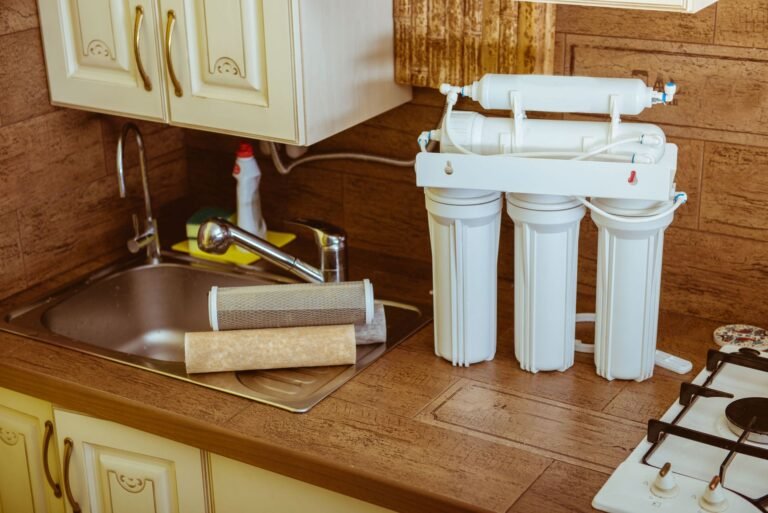
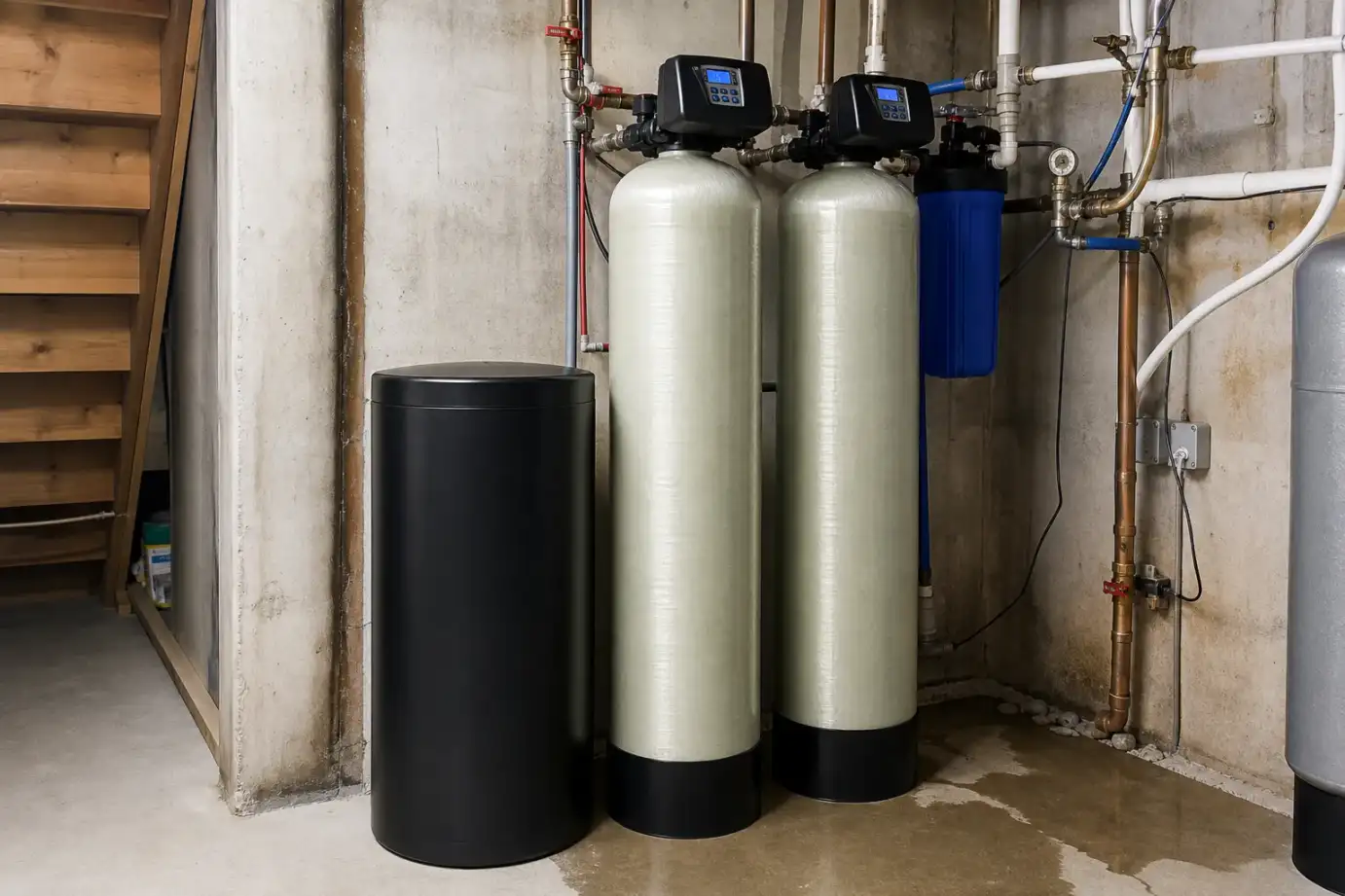
Whole house filtration can provide a broader approach by treating water as it enters the home. Depending on the filter technology selected, a whole-house system can be designed to address sediment, taste, odor and certain other water-quality concerns.
The important phrase is “depending on the filter technology.”
There isn’t one filter that removes everything. Different media and technologies are designed for different purposes.
A homeowner should therefore choose the system based on water testing rather than a generic promise that the filter will “clean” the water.
Understanding Iron and Rust Staining
Iron is a common concern in some private-well water supplies. It can leave orange, reddish or brown stains on sinks, toilets, tubs and laundry.
Sometimes the water looks perfectly clear when it comes out of the faucet and develops a rusty color after sitting for a while. In other situations, the water may have a noticeable tint immediately.
Iron & rust treatment is designed to address these specific conditions, but the appropriate method depends on the type and concentration of iron present.
Different forms of iron behave differently in water. Some are easier to filter, while others may require oxidation or another treatment step before filtration.
That’s why simply buying a generic iron filter can be a gamble.
Why Iron Can Be More Than a Cosmetic Problem
Orange stains are certainly unattractive, but iron can create other headaches.
It may affect laundry, leave deposits on fixtures and contribute to buildup in plumbing or treatment equipment. High concentrations can also produce an unpleasant metallic taste.
In homes where iron is persistent, addressing the source rather than repeatedly cleaning stains can make everyday maintenance much easier.
The right treatment can help protect fixtures while improving the overall appearance and taste of the water.
That Rotten-Egg Smell Has a Reason
Few water complaints are as memorable as a sulfur-like odor.
The smell is often compared to rotten eggs, and it can be particularly noticeable in hot water. In many cases, hydrogen sulfide or sulfur-producing bacteria may be involved, although the actual cause should be investigated rather than assumed.
A strong odor doesn’t necessarily tell you exactly which treatment is needed.
Testing can help determine whether the issue is related to dissolved hydrogen sulfide, bacteria or another water characteristic.
What Sulfur Treatment Can Do
When sulfur-related odors are confirmed, sulfur treatment can be designed around the source and severity of the problem.
Depending on the water chemistry, treatment may involve aeration, oxidation, filtration or other technologies. Some systems combine multiple stages to address both odor and related water-quality concerns.
The goal isn’t simply to cover up the smell. Good treatment should address the underlying characteristic causing it.
This distinction matters because a temporary improvement may not last if the actual cause remains untreated.
Hot Water Can Make Odors More Noticeable
If the odor is primarily noticeable when you turn on the hot water, the water heater deserves attention.
Certain conditions inside a water heater can contribute to sulfur odors. The issue may not necessarily originate in the well itself.
This is one reason troubleshooting should consider the entire plumbing system.
If the odor appears in both hot and cold water, the source may be farther upstream. If it occurs only in hot water, the water heater may be part of the investigation.
Small observations like this can help narrow down the possibilities.
Don’t Ignore Sediment
Iron and sulfur aren’t the only issues that can affect private-well water.
Sediment may enter the water supply and create cloudy water, particles or deposits. Over time, sediment can also interfere with filters, valves and other treatment equipment.
A sediment prefilter can sometimes help protect downstream equipment, particularly when the incoming water contains noticeable particles.
Again, the appropriate filter size and design depend on the water and the home’s flow requirements.
Maintenance Makes a Difference
Even a well-designed treatment system needs attention.
Filters eventually become loaded. Media may need replacement or servicing. Components can wear out. If maintenance is ignored, performance can gradually decline without the homeowner realizing it.
Keep track of filter changes and service visits. If water quality suddenly changes, don’t assume the system simply needs a new filter. The source water itself may have changed, or another component may be causing the problem.
Regular attention can prevent small issues from becoming expensive repairs.
Don’t Treat Symptoms Without Understanding the Cause
It’s tempting to buy a filter because the water looks rusty or smells strange.
But appearance and odor are clues, not diagnoses.
A water test provides the information needed to choose the right treatment. It can prevent homeowners from spending money on equipment that isn’t designed for the actual problem.
That matters because water treatment systems aren’t interchangeable. What works beautifully for iron may do little for sulfur odor. A sediment filter may catch particles but won’t necessarily address dissolved minerals.
Matching the technology to the problem is the key.
Cleaner Water Starts With Better Information
Water problems can be frustrating, especially when they show up as stains, odors or recurring maintenance chores. But they’re often easier to manage once you understand what’s causing them.
Start with testing. Look at the water source, pay attention to when symptoms appear and consider how the issue affects the entire home.
From there, treatment can be much more targeted.
Whether the concern is sediment, iron staining, sulfur odor or another water-quality characteristic, the goal isn’t to build the most complicated system possible. It’s to create a practical setup that treats the water effectively and can be maintained over time.
Once the right system is in place, those orange stains and strange smells don’t have to be part of everyday life. The water can simply go back to being what you expect it to be — clean, dependable and pleasantly unremarkable.