A glass of tap water doesn’t usually give you much information about where it’s been. It looks clear, tastes fine, and you assume the job is done.
Then you notice something.
There’s a little grit at the bottom of a glass. A faucet aerator keeps collecting tiny particles. Maybe the water looks slightly cloudy after plumbing work, or your washing machine filter seems to catch more debris than it used to.
Sediment can be easy to overlook because it isn’t always dramatic. But particles in household water can affect fixtures, appliances, plumbing components, and other treatment equipment.
The good news is that sediment is one of the water-quality issues that can often be addressed with a relatively straightforward approach. The trick is choosing a filter based on what is actually in the water.
What Counts as Sediment?
Sediment is essentially suspended particulate matter carried by water.
It can include sand, silt, dirt, rust particles, or other physical debris. The source varies. Private wells may pick up naturally occurring particles, while older plumbing can contribute rust or scale fragments.
Construction, utility work, pipe repairs, or changes in a water source can also temporarily increase sediment.
Some particles are large enough to see. Others are so small that the water looks completely clear.
That doesn’t necessarily mean the water is dangerous. But it can still be inconvenient and damaging to plumbing components over time.
Why Sediment Filtration Matters
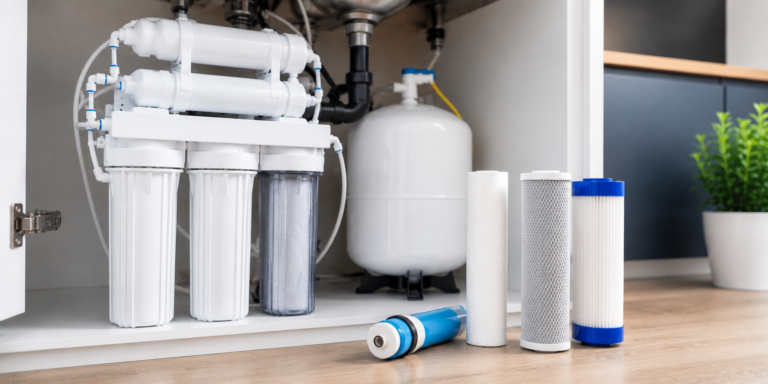
The basic purpose of sediment filtration is simple: physically capture particles before they travel farther into the plumbing system.
A properly selected sediment filter can help protect faucets, valves, appliances, and downstream treatment equipment from unwanted particles.
Think of it as a first line of defense.
If your home has a whole-house treatment system, sediment filtration may also protect more sensitive components that aren’t designed to handle large amounts of particulate matter.
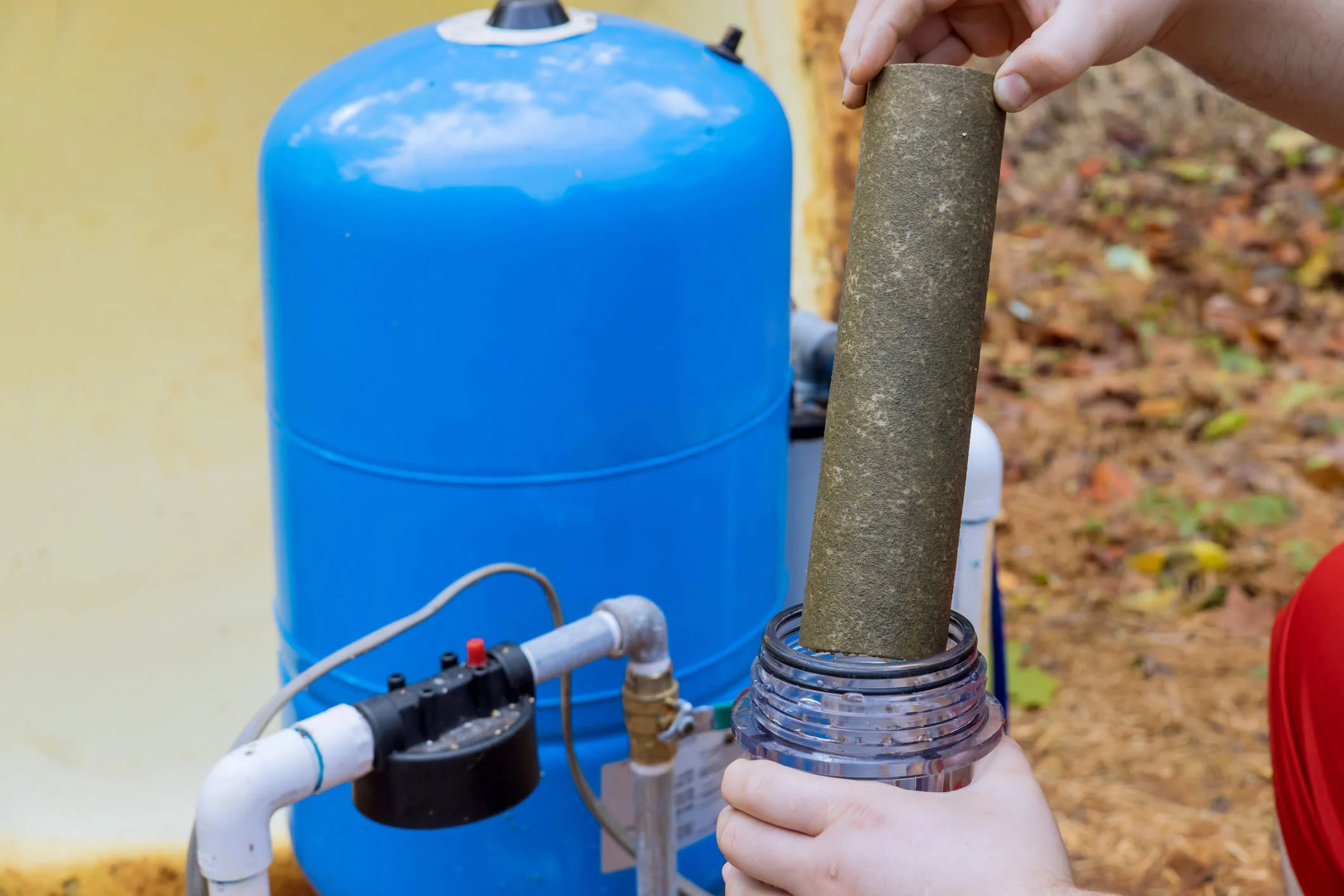
The filter itself eventually collects what it removes, which is why maintenance matters.
A clogged filter isn’t doing anyone much good.
Different Filters Catch Different Sizes
Not every sediment filter performs the same way.
Filters are available with different micron ratings, which indicate the approximate size of particles they are designed to capture. A lower micron rating generally means finer filtration, although actual performance depends on filter construction, flow conditions, and other factors.
A very fine filter may sound like the obvious choice.
It isn’t always.
If you install filtration that’s too restrictive for the household’s flow requirements, pressure can suffer. And if the water contains a large amount of coarse sediment, a finer filter may become clogged quickly.
Sometimes a staged approach works better, with a coarser filter handling larger particles before finer filtration.
When Iron Enters the Picture
Iron can make sediment problems more complicated.
Water with elevated iron may leave orange or reddish staining on fixtures, laundry, sinks, and toilets. In some cases, iron can appear as particles after exposure to air. In others, it may be dissolved and require a completely different treatment process.
This is why iron & sediment filtration should not be treated as one generic problem.
If testing shows both iron and sediment, the system needs to account for the form and concentration of the iron as well as the physical particles.
A basic sediment cartridge may catch particulate iron, but it may not address dissolved iron effectively.
Testing is the sensible starting point.
Private Wells Need Special Attention
Private wells can have unique sediment issues.
Groundwater naturally moves through soil and rock, and conditions can vary significantly from one property to another. A well may also develop problems with sediment if the casing, pump, or surrounding environment has an issue.
If sediment suddenly appears where it wasn’t present before, don’t simply install a finer filter and forget about it.
A sudden change deserves investigation.
It could be a temporary disturbance, but it might also indicate a problem with the well or plumbing system.
Regular testing and appropriate well maintenance can help catch changes before they become bigger headaches.
Specialty Filters Have a Role
Some water conditions simply don’t fit into a standard sediment-filter category.
That’s where specialty filters can become useful.
Depending on the application, specialty filtration may be designed for unusual particle sizes, specific materials, high-flow commercial applications, or water conditions requiring a more specialized approach.
The important thing is to understand what the filter is actually designed to remove.
A product description may list an impressive number of capabilities, but the details matter. Flow rate, pressure drop, capacity, filter media, replacement interval, and contaminant type all influence real-world performance.
A filter isn’t good because it’s sophisticated. It’s good because it matches the job.
Look at the Whole Plumbing System
Sediment rarely exists in isolation.
If particles are entering through the main water supply, every downstream fixture can potentially encounter them.
That includes showerheads, faucets, washing machines, dishwashers, water heaters, and other equipment.
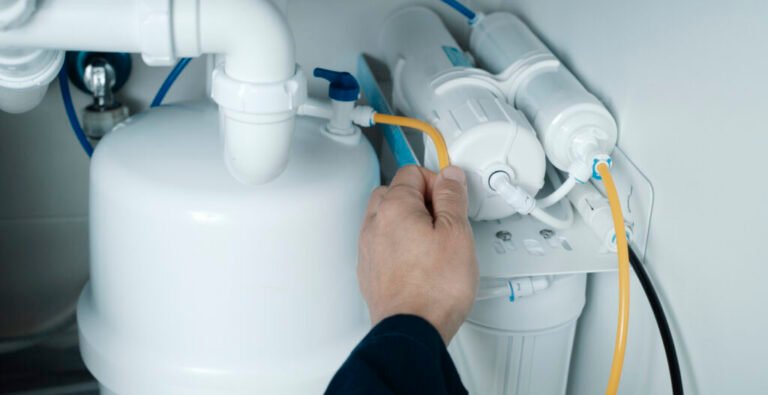
Installing a whole-house sediment filter can therefore make sense when the concern affects the entire property.
For a single point of use, a smaller filter may be enough.
Again, location matters.
You don’t want to solve a whole-house problem with a tiny filter under the kitchen sink.
Don’t Ignore Water Pressure
One of the most common trade-offs with filtration is pressure.
Every filter introduces some resistance to water flow. As the filter becomes loaded with sediment, that resistance can increase.
If your household already has marginal water pressure, filtration needs to be selected carefully.
Look at the filter’s rated flow and pressure requirements rather than choosing solely by micron rating.
A filter that captures extremely fine particles but slows the entire house to a trickle isn’t necessarily a great solution.
Balance matters.
Maintenance Is Part of the Design
Sediment filters are meant to collect particles. Eventually, they will fill with them.
That’s not a failure. It’s the filter doing its job.
The problem comes when the filter is left in place too long.
A loaded filter can restrict flow and may reduce the system’s effectiveness. Replacement frequency depends on sediment concentration, household water use, filter capacity, and the type of cartridge being used.
Some systems use clear housings, allowing homeowners to see when a filter is becoming dirty. Others rely on pressure gauges or scheduled replacement.
Whatever method you use, don’t ignore the maintenance schedule.
Testing Helps You Avoid Over-Treating
Before investing in a complex filtration setup, find out what you’re dealing with.
A water analysis can help determine whether the issue is sediment, iron, hardness, or something else entirely.
This is important because water that looks dirty isn’t necessarily suffering from a single problem.
You might discover that the sediment is temporary. Or you may find that there’s significant iron that requires specialized treatment.
The more accurately you identify the cause, the less likely you are to buy equipment that doesn’t solve it.
Sometimes Simple Is Better
There’s a temptation to make water treatment complicated.
But if the problem is straightforward sediment, a properly sized sediment filter may be all you need.
The goal isn’t to install every possible treatment technology. It’s to protect the water system and address the actual issue.
Start with the source. Test the water. Determine the type and amount of sediment. Consider household flow requirements and maintenance needs.
Then select filtration accordingly.
That process may sound less exciting than buying the newest high-tech system, but it tends to produce better results.
A Cleaner Plumbing System Starts With the Right First Step
Sediment may not be the most glamorous water-quality topic, but it can have a very real impact on a home’s plumbing and equipment.
The right filter can capture unwanted particles before they travel through the system, helping reduce nuisance buildup and protecting downstream components.
The key is matching filtration to the water.
A basic cartridge may be perfect for one property. Another may need staged filtration or specialized treatment because of iron, high sediment loads, or unusual water conditions.
There’s no universal answer.
What matters is understanding what’s coming through the pipe, choosing equipment that can handle it, and maintaining that equipment once it’s installed.
When those pieces come together, the result is refreshingly simple: fewer particles, fewer surprises, and a water system that can do its job without fighting what’s coming down the line.