Water treatment can seem like one of those home projects that’s easy to postpone. The water still comes out of the faucet, after all. Maybe there’s some scale around the sink or a slightly odd taste, but life goes on.
Then one day you notice the shower glass again. Or the coffee doesn’t taste quite right. Or you’re tired of buying bottled water every few days.
That’s usually when the search begins.
The tricky part is that choosing a treatment system isn’t as simple as picking the most expensive filter or the product with the longest list of features. Water problems vary from home to home, and the right solution depends on the source, the water chemistry, household usage, and what you actually want to improve.
A little investigation at the beginning can save plenty of frustration later.
Start With What’s Coming Out of the Faucet
Before thinking about equipment, take a close look at the water itself.
Does it have an unusual smell? Are there orange stains in the sink? Is there white scale around faucets? Does the water taste strongly of chlorine? Maybe the problem only appears in hot water.
These details don’t provide a diagnosis, but they’re useful clues.
A proper water test can reveal characteristics that aren’t visible to the eye. Hardness, pH, iron, manganese, dissolved solids, and other measurements can help determine which treatment technologies are worth considering.
In other words, don’t shop for a solution before understanding the problem.
Testing Can Make the Decision Much Easier
Many homeowners hesitate to test their water because they assume it’s going to be complicated or expensive. In reality, testing is often one of the simplest ways to narrow down your choices.
Some treatment companies offer a free in home water test and estimate, which can be a convenient starting point for homeowners who aren’t sure where to begin.
If you use a testing service, ask what the test actually measures. A basic screening and a comprehensive laboratory analysis aren’t necessarily the same thing.
For private wells or suspected contamination, more detailed testing may be appropriate.
The important thing is to get useful information rather than simply checking a box that says “water tested.”
Every Water Problem Has Its Own Personality
Hard water is a classic example.
It comes primarily from calcium and magnesium and can lead to scale on fixtures, shower doors, appliances, and plumbing components. A water softener is designed to address that specific issue.
Sediment is different. It involves particles suspended in the water and may require sediment filtration.
Taste and odor can have several causes, including disinfectants or naturally occurring substances, and carbon filtration may help in certain cases.
Then there are dissolved substances that require more specialized treatment.
The point is simple: one technology doesn’t automatically handle everything.
When a Whole-House Approach Makes Sense
Some water concerns aren’t limited to the kitchen faucet.
If hardness is causing scale throughout the house, or sediment is appearing at several fixtures, treating only drinking water won’t solve the underlying household problem.
That’s where a whole home solution can be useful.
Whole-house treatment is installed on the incoming water line so treated water can reach multiple fixtures. Depending on test results, a system might include a softener, sediment filter, carbon treatment, iron removal equipment, or another technology.
The exact combination should be based on the water analysis.
There’s no prize for installing the largest system. The goal is to treat the water appropriately without adding unnecessary equipment.
Drinking Water Can Be Treated Separately
Sometimes the household water is generally fine for bathing and cleaning, but you’d still like additional treatment for the water you drink and cook with.
A point-of-use system can be a practical answer.
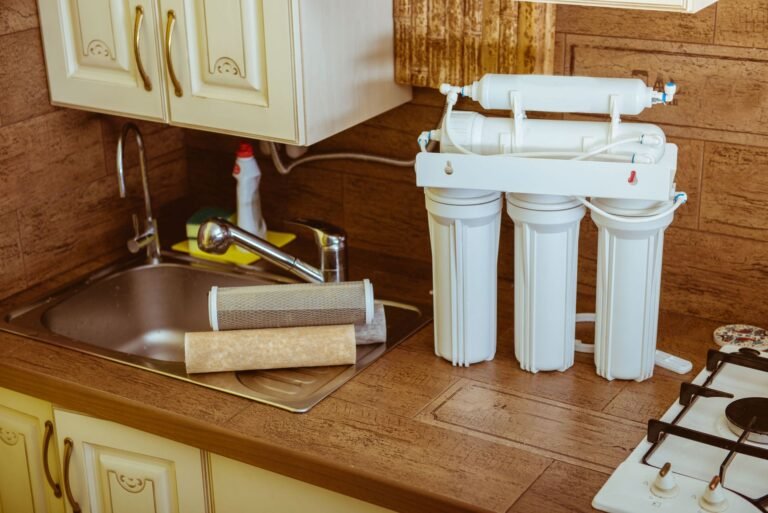
These systems typically sit near a kitchen faucet and provide treated water without requiring the entire home’s water supply to pass through the same treatment process.
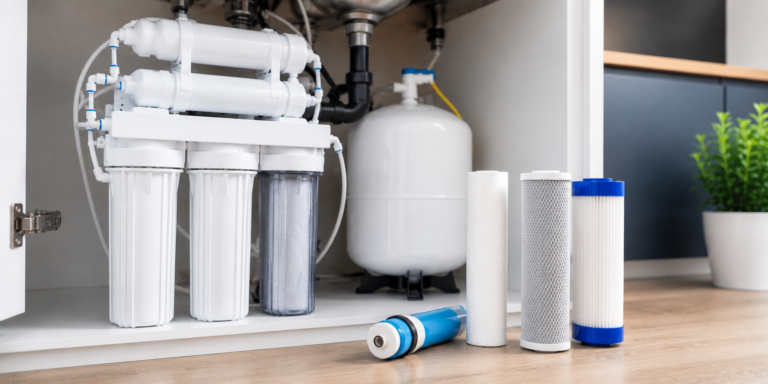
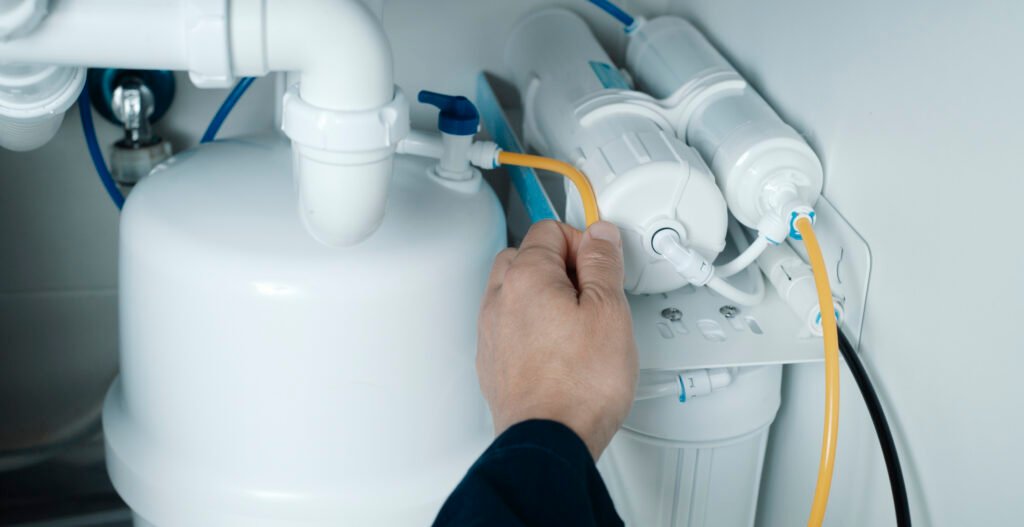
For certain dissolved substances, a reverse osmosis system can provide a more extensive level of drinking-water treatment. Reverse osmosis uses pressure to move water through a semipermeable membrane, reducing many dissolved substances in the treated water.
A typical system may also include pre-filters and a post-filter to protect the membrane and improve taste.
Reverse Osmosis Isn’t the Answer to Everything
Reverse osmosis has a strong reputation, and for good reason. It can be useful for a range of drinking-water concerns.
But it isn’t automatically the best option for every home.
The system needs appropriate water pressure, regular filter and membrane maintenance, and a suitable installation setup. It also produces a stream of reject water as part of the treatment process, so homeowners should understand how the system operates before choosing it.
If your main issue is simply chlorine taste, for example, a carbon filter might provide the improvement you’re looking for without the additional complexity of reverse osmosis.
Again, test first.
Think About How Much Water Your Household Uses
Water treatment equipment needs to match the home.
A household of one or two people has different requirements from a family of six. Morning showers, laundry, dishwashing, cooking, and simultaneous faucet use can create significant demand.
Flow rate matters for whole-house equipment. Storage capacity matters for some drinking-water systems.
If the system is undersized, you may notice reduced performance during busy periods. If it’s dramatically oversized, you’ve potentially spent more money than necessary.
A professional evaluation can help match equipment to actual household demand.
Installation Should Be Part of the Conversation
Even a well-designed system can disappoint if installation is rushed or poorly planned.
The installer needs to consider water pressure, available space, plumbing connections, drainage, electrical requirements where applicable, and future maintenance access.
Under-sink equipment deserves particular attention because cabinet space can get tight quickly.
Make sure filters, valves, and other service components remain accessible. You don’t want a routine filter change turning into a plumbing puzzle.
Good installation isn’t just about getting the system running on day one. It’s about making sure you can live with it afterward.
Maintenance Is Where Many Systems Succeed or Fail
Water treatment equipment needs attention over time.
Filters eventually need replacement. Reverse osmosis membranes wear out. Softening systems may require salt. Other treatment media may need periodic servicing or replacement.
It can be tempting to postpone maintenance when everything appears to be working normally.
That’s not always wise.
A filter can become overdue without producing an obvious warning. Keep a simple record of installation and replacement dates, and follow the manufacturer’s recommendations.
If your water changes suddenly, don’t assume the equipment will compensate automatically. Retesting may be the smarter move.
Consider the Long-Term Cost
Price tags can be misleading.
The purchase price is only one part of owning a treatment system. Look at installation, replacement filters, membranes, service, electricity, salt, and other ongoing expenses.
A cheaper system may become expensive if replacement parts are difficult to find. A more expensive system might be worthwhile if it has durable components and reasonable maintenance requirements.
On the other hand, paying extra for features you’ll never use doesn’t necessarily create value.
Ask what you’re getting and why you need it.
Be Careful With Big Promises
Water treatment advertising can be persuasive. Phrases like “advanced purification,” “complete protection,” and “ultimate water quality” sound impressive.
But specific claims matter more than impressive wording.
Ask what the system is designed to reduce. Ask whether independent testing supports the claim. Ask what happens when filters become saturated. Ask how often the equipment needs maintenance.
A reputable provider should be willing to explain both the strengths and limitations of the system.
That honesty is worth more than a flashy sales presentation.
The Right System Is the One That Fits Your Home
There isn’t a universal answer to water treatment.
One home may need softening throughout the house. Another may need sediment and iron treatment. A third may simply want better-tasting drinking water from a kitchen faucet.
The best choice starts with understanding your water and your priorities.
Test before you buy. Think about household water use. Consider installation space and maintenance. Compare the long-term costs rather than focusing only on the initial price.
Most importantly, choose technology for a reason.
Once the system is properly matched to your water, the whole process becomes much less mysterious. You aren’t buying equipment because it sounds advanced. You’re solving a specific problem.
And that’s really what good water treatment should do.
It should quietly improve the water you use every day, without creating another complicated project for you to worry about. A glass from the kitchen faucet, a better cup of coffee, cleaner fixtures, fewer deposits—that’s the kind of improvement you notice without having to think about it.