Water problems at home rarely arrive with a dramatic warning. More often, they creep in slowly. A white ring around the faucet. A showerhead that doesn’t spray quite right. Glasses that come out of the dishwasher covered in spots. Maybe the water tastes a little odd, but not odd enough to make you stop using it.
Then one day you realize these small annoyances have become part of your routine.
That’s usually when homeowners start asking a bigger question: is there something we can do about the water itself?
The answer depends on what’s actually causing the problem. Water can contain minerals, sediment, chemicals and other substances that affect taste, appearance, plumbing and appliances. And because those issues can vary from one home to another, choosing treatment equipment should start with understanding the water rather than simply buying whatever system has the most impressive description.
The Trouble With Ignoring Small Signs
It’s tempting to dismiss minor water issues.
A little scale on the shower glass doesn’t seem worth worrying about. Neither does a faucet aerator that needs cleaning every few months.
But recurring signs can tell you something useful.
For example, persistent mineral deposits may point toward hardness. A sudden change in taste or odor could have a different cause entirely. Sediment in a glass may indicate particles entering the home’s water supply or plumbing.
None of these clues provides a complete diagnosis, but they’re worth noticing.
The biggest mistake is often assuming that every water issue has the same solution.
Hard Water Has a Way of Making Itself Known
Among the most common household complaints are hard water problems.
Hard water contains elevated levels of calcium and magnesium. These minerals aren’t necessarily something you can see floating in the water. Instead, you notice what they leave behind.
Scale can accumulate on faucets, shower fixtures and other surfaces. Glassware may develop spots. Soap can be more difficult to rinse away. Water heaters and other equipment that heat water can also experience mineral buildup over time.
For some households, these effects are mostly cosmetic. For others, they’re an everyday frustration.
Testing the water can help determine how hard it actually is and whether treatment is warranted.
Don’t Assume a Filter Fixes Everything
The word “filter” sounds universal, but water filtration is actually a broad category.
Different water filtration systems are designed for different purposes.
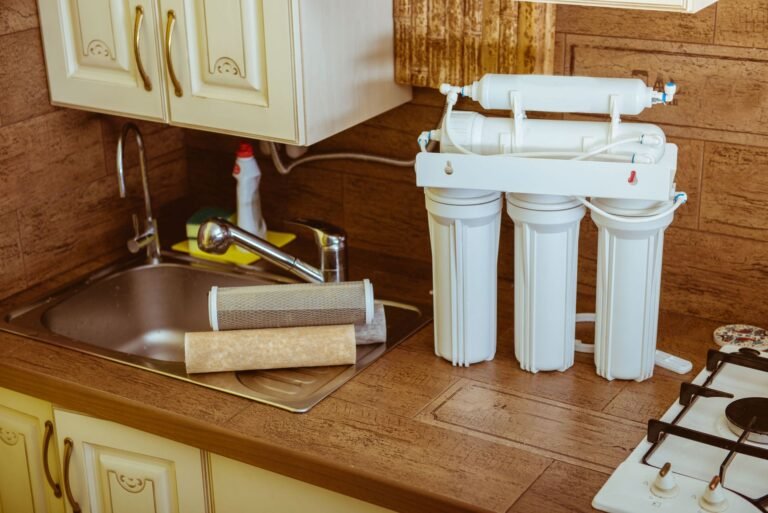
A sediment filter may capture particles. Activated carbon can help reduce certain tastes, odors and chemicals. More advanced technologies can target other dissolved substances.
A filter designed for sediment won’t necessarily solve hardness. Likewise, a water softener isn’t designed to remove every contaminant that might be present.
That’s why treatment should be based on the specific water-quality concern.
If someone recommends a system, ask what it is designed to reduce and whether there is evidence that it addresses the issue found in your water.
Water Can Look Fine and Still Need Attention
One of the more confusing things about household water is that appearance isn’t a reliable quality test.
A perfectly clear glass may contain dissolved minerals or other substances that aren’t visible. On the other hand, cloudy or discolored water may have several possible explanations, some of which have nothing to do with a filtration problem.
This is where water quality testing becomes useful.
Depending on the source and situation, testing can examine factors such as hardness, pH, iron, chlorine, dissolved solids or other characteristics.
The goal isn’t to turn your kitchen into a laboratory. It’s simply to replace guesswork with information.
Municipal Water and Well Water Aren’t the Same
Where your water comes from matters.
Municipal water is treated before distribution, but conditions can still vary based on the source and local infrastructure. Household plumbing can also influence what comes out of the tap.
Private well water is different. Its characteristics depend heavily on local groundwater and geology, and those conditions can change.
For well owners in particular, periodic testing can be an important part of understanding the water supply.
Treatment should follow the results rather than assumptions about what “well water” or “city water” is supposed to be like.
Think About Where You Want the Improvement
Not every water concern needs to be treated throughout the entire house.
If the main complaint is drinking-water taste, a point-of-use filter at the kitchen sink may be enough.
If sediment or another issue affects multiple fixtures, whole-house treatment may make more sense.
This is an important distinction because the size and cost of a system can increase significantly when you’re treating the home’s entire water supply.
Before buying anything, ask yourself where the problem actually occurs.
Do you notice it only when drinking? Is it visible in the shower? Does it affect laundry? Is the water heater showing signs of scale?
Those answers help narrow down the options.
Household Demand Matters Too
Treatment equipment needs to keep up with how your home uses water.
A household of two people has different demands than a household of seven. Peak usage can be just as important as total daily consumption.
Picture a typical morning. Multiple showers are running, a toilet flushes, someone starts the washing machine and another person is filling a bottle.
If the treatment system isn’t properly sized, flow can become an issue.
A professional assessment can help determine the appropriate capacity and flow rate based on actual household needs.
Installation Deserves More Attention Than It Gets
Even good equipment can cause headaches if it’s installed poorly.
Treatment systems need appropriate connections, enough service space and, depending on the technology, access to drainage or electricity.
Placement matters, too.
A filter that is technically accessible but wedged behind other equipment isn’t particularly convenient. Future maintenance should be considered during installation, not after the first service visit becomes a puzzle.
Good installation should leave you with equipment that is easy to understand and reasonably easy to maintain.
Maintenance Is Part of Water Treatment
Once a system is installed, the job isn’t finished.
Filters need changing. Media may need replacement. Valves and connections can require inspection. Certain systems need periodic cleaning or servicing.
These tasks aren’t glamorous, but they’re what keep treatment equipment working as intended.
Set reminders for routine maintenance. Keep track of replacement dates. If professional service is recommended, follow the schedule rather than waiting for the system to stop performing.
A filter doesn’t always announce that it’s exhausted. Performance can decline gradually.
Look at the Full Cost
A treatment system’s purchase price is only the beginning.
Think about replacement cartridges, membranes, salt or other supplies, electricity, water consumption and professional maintenance.
A cheaper system may not remain cheaper if its components are difficult to find or expensive to replace.
On the other hand, paying more for features you don’t need doesn’t make much sense either.
Long-term value comes from matching the equipment to the actual problem and choosing something you’ll realistically maintain.
Be Skeptical of One-Size-Fits-All Claims
Water treatment isn’t a situation where one product automatically solves everything.
If a company claims that a single system will address every possible water issue, ask for specifics.
What does it remove? What does it not remove? What testing supports the recommendation? What maintenance does it require?
Clear answers are a good sign.
Vague promises aren’t.
The Best Solution Is Usually the Most Appropriate One
You don’t need to become a water-treatment expert to make a smart decision.
Start by noticing the symptoms. Test the water when appropriate. Understand whether you’re dealing with hardness, sediment, taste, odor or another concern.
Then choose technology based on that information.
The goal isn’t to create the most sophisticated water setup in the neighborhood. It’s to solve the problem without creating three new ones.
Good treatment should make everyday life easier. Fewer deposits. Better taste. Cleaner fixtures. Less frustration.
And once everything is working properly, the system should fade into the background.
That’s probably the best outcome of all. You turn on the tap, get the water you expect, and don’t give it another thought.