
Most homeowners think about water in very practical terms. Is it running? Is it hot? Does the shower have enough pressure? Does the faucet stop dripping when you turn it off?
But there’s another question that often gets overlooked: how is the water affecting everything it touches?
Water travels through pipes, enters appliances, heats up, evaporates, mixes with soap, and lands on countertops and glass. Over time, its mineral content and other characteristics can influence how the home behaves. You may notice it as scale around a faucet, spots on dishes, or an appliance that seems to need cleaning more often than it should.
It isn’t always a dramatic problem. More often, it’s a slow accumulation of little annoyances.
Understanding the relationship between household water and maintenance can help you decide when treatment makes sense—and when it’s better to simply leave things alone.
Water Is Part of Your Home’s Daily Workload
Think about how many times your home uses water in a single day.
Showers, sinks, toilets, dishwashers, washing machines, coffee makers, ice makers, and water heaters all rely on the same basic supply. That’s a lot of contact.
The interaction between plumbing and appliances and household water can become more noticeable when the water contains significant amounts of hardness minerals such as calcium and magnesium. These minerals can form deposits when water evaporates or is heated.
Over months and years, those deposits can affect fixtures and equipment.
This doesn’t mean hard water automatically damages everything it touches. The impact varies depending on mineral concentration, temperature, equipment design, usage, and maintenance. Still, if you’re constantly scrubbing white residue from faucets or descaling appliances, there’s probably a reason.
Water Quality Is More Than Taste
People often judge water by taste first.
That’s understandable. If water tastes clean and fresh, you rarely question it. But water quality includes much more than flavor.
It can involve mineral content, pH, sediment, disinfectants, metals, and other substances. Some characteristics are mostly aesthetic, while others may have implications for household equipment or health.
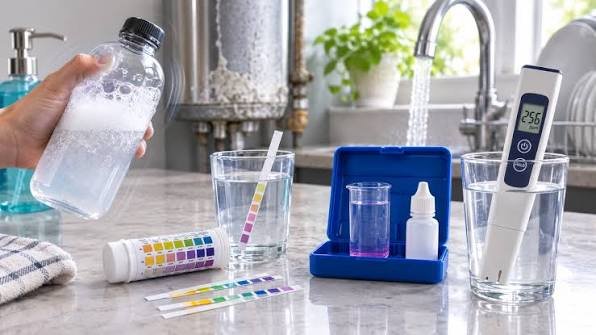
This is why water testing can be useful when you’re trying to understand a persistent problem. Instead of guessing whether your water is “bad,” testing can show what is actually present and at what concentration.
That information can help you avoid buying treatment equipment you don’t really need.
Hard Water Leaves Familiar Evidence
Hard water is one of the most common reasons homeowners consider treatment.
Calcium and magnesium aren’t unusual contaminants. They’re naturally occurring minerals that can enter groundwater as water moves through rock and soil.
The trouble starts when those minerals create deposits.
A faucet may develop a chalky ring. A showerhead can become partially blocked. Glassware may show cloudy spots after washing. A kettle can accumulate a crusty layer around the heating surface.
You can clean these deposits, of course. Vinegar and other descaling products can be useful for suitable surfaces and appliances.
But if deposits return quickly, treating the water may reduce the amount of cleaning required.
How a Water Softener Fits In
For households with significant hardness, a water softener can be a practical solution.
Traditional ion-exchange softeners reduce calcium and magnesium by exchanging them with another ion, commonly sodium or potassium. The result is water with lower hardness, which can reduce scale formation throughout the plumbing system.
The difference can be noticeable.
Soap may lather more easily. Mineral spots may become less frequent. Showerheads and faucets may stay cleaner for longer. Appliances that use hot water may experience less scale formation.
But a softener isn’t a universal purifier. It is primarily a hardness-treatment device.
If testing shows other water-quality concerns, additional treatment may be needed.
Your Water Heater Can Feel the Difference
Water heaters are particularly exposed to hard-water conditions because they heat large amounts of water repeatedly.
Heat can encourage minerals to precipitate and form deposits. Sediment can also accumulate at the bottom of storage tanks.
Regular maintenance is important regardless of whether your water is hard. Flushing schedules, temperature settings, and manufacturer recommendations should be followed according to the type of equipment you have.
If you’re hearing popping or rumbling sounds from a tank-style water heater, it’s worth having the situation checked rather than assuming the noise is harmless.
Sometimes a little preventive attention can extend equipment life.
Appliances Tell Their Own Story
Your coffee maker, dishwasher, washing machine, and ice maker may all reveal what’s happening with the water.
Coffee makers and kettles are particularly obvious because heating water can leave mineral deposits behind. Dishwashers may struggle with spotting, while ice makers can accumulate deposits in components and water lines.
Regular cleaning helps. So does following the appliance manufacturer’s maintenance instructions.
But if you’ve become accustomed to constant descaling, it may be worth asking whether the underlying water chemistry is contributing to the problem.
The answer might be yes—or it might not. That’s where testing becomes useful.
Don’t Treat Every Water Problem as a Hardness Problem
This is an easy mistake to make.
If your water tastes strange, you might assume it’s hard. If it looks cloudy, you might assume it’s minerals. If your shower pressure drops, you might blame scale.
Sometimes those assumptions are correct. Sometimes they’re completely wrong.
Sediment, plumbing corrosion, clogged aerators, changes in municipal supply, failing components, and other issues can create similar symptoms.
A water softener won’t fix a clogged faucet aerator. A sediment filter won’t necessarily address dissolved substances. And a drinking-water filter isn’t a replacement for repairing damaged plumbing.
Good troubleshooting starts with identifying the actual problem.
Consider the Whole House
If treatment is appropriate, think about where you want it to work.
A point-of-use system can treat water at a particular faucet, often making sense for drinking and cooking. Whole-home treatment works differently, addressing water before it travels through the property’s plumbing.
Your choice depends on the problem.
If you’re mainly concerned about taste, a kitchen filtration system might be enough. If scale is affecting showers, fixtures, and appliances throughout the home, point-of-entry treatment may be more appropriate.
There isn’t a universal “best” setup. There is only a setup that fits the water and the household.
Maintenance Doesn’t End After Installation
Installing treatment equipment is only the beginning.
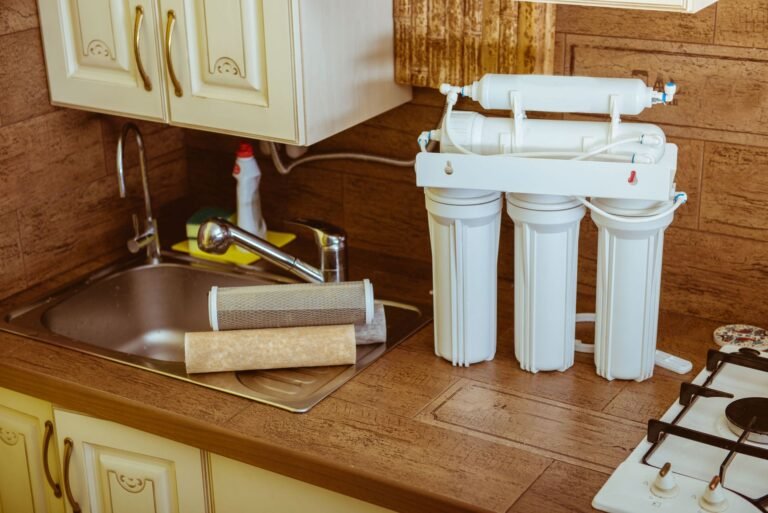
Filters need replacement. Softeners may require salt and periodic service. Connections should be checked, and components eventually wear out.
It’s tempting to forget about equipment once it’s installed, especially when it’s tucked away in a garage or under a sink. But water-treatment systems work best when maintenance stays on schedule.
Keep track of filter changes and service appointments. If a system is designed to reduce a specific contaminant, periodic testing can also help confirm that it continues to perform as intended.
Don’t Ignore the Cost of Convenience
Water treatment isn’t just about preventing damage.
There’s value in reducing everyday chores. If you’re constantly cleaning scale from faucets, replacing clogged showerheads, or descaling appliances, a suitable treatment system may make life easier.
Of course, treatment has its own costs. Installation, replacement media, electricity, salt, filters, and servicing all need to be considered.
A good decision weighs those expenses against the problems you’re actually experiencing.
If hard water barely affects your home, treatment may not be worth it. If it’s causing constant maintenance and affecting expensive equipment, the calculation can look very different.
A Little Knowledge Goes a Long Way
Water doesn’t need to be perfectly pure to work well for your household.
What matters is understanding its characteristics and deciding whether those characteristics are causing a meaningful problem.
Start with testing when appropriate. Look for patterns. Pay attention to appliances and fixtures. Separate hardness from other water-quality concerns. Then choose treatment based on evidence rather than advertising.
For some homes, the answer may be a water softener. For others, a drinking-water filter or another treatment method may be more appropriate. And for some, no treatment is necessary at all.
That’s perfectly fine.
The smartest water-management decision isn’t the one with the most equipment. It’s the one that solves a real problem without creating unnecessary expense or complexity.
Once you understand how your water interacts with your home, those mysterious white spots, stubborn deposits, and constantly needy appliances start to make a lot more sense. And that’s a pretty good place to begin.