
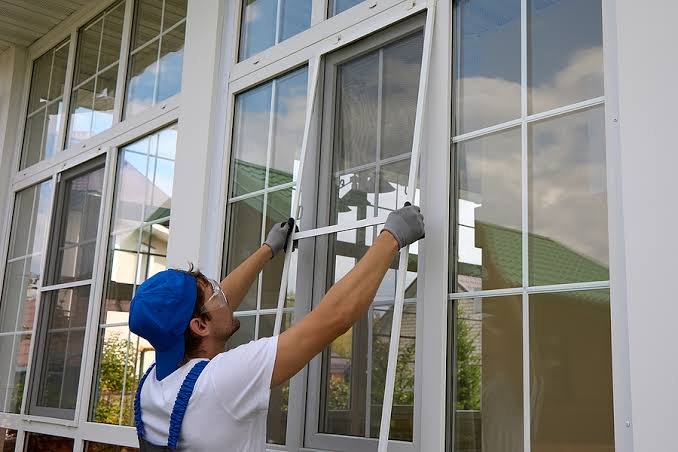
Windows don’t usually fail all at once. More often, they give you little hints. A draft appears in winter. The latch becomes harder to operate. Condensation shows up between the panes. A corner of the frame starts looking darker than it used to.
It’s easy to ignore these things, especially when the rest of the house seems perfectly fine. After all, a sticky window doesn’t feel like an emergency.
But small exterior problems have a habit of becoming bigger ones when they’re left alone for too long. Windows are part of the home’s weather barrier, and their condition can affect comfort, moisture control, appearance, and even how well the rest of the exterior performs.
The good news is that not every troublesome window needs to be replaced. Sometimes a repair is enough. Sometimes replacement is the sensible choice. Knowing the difference is where things get interesting.
Start With What the Window Is Telling You
Before calling anyone, take a quick look at the problem.
Does the window open and close normally? Is there visible cracking? Are the seals damaged? Do you see moisture or staining around the frame? Is the glass fogging between panes?
These clues can help identify what might be happening.
A window that’s difficult to open could have worn hardware or frame movement. A draft might come from deteriorated weatherstripping rather than the entire unit. Persistent moisture, however, deserves more attention because it can sometimes point toward water intrusion.
Don’t focus only on what looks ugly. Focus on what affects performance.
Choosing the Right Professionals Matters
Windows are deceptively complicated. From the outside, installation can look like a simple matter of placing a frame into an opening. In reality, proper fitting involves measurements, shimming, fastening, insulation, flashing, drainage, and sealing.
Experienced window contractors should be able to explain these details in plain language.
When comparing contractors, ask how they handle existing framing, moisture damage, and exterior finishes. Find out whether removal and disposal are included. Ask what warranty covers the product and what covers the workmanship.
You don’t need to become a window expert before hiring someone.
You just need enough information to recognize a thoughtful professional from someone who’s mainly interested in getting the contract signed.
Sometimes a Repair Is All You Need
Replacing every old window isn’t automatically the smartest solution.
If the frame is sound and the problem is limited to hardware, weatherstripping, screens, or a small seal issue, window repair may restore useful life at a much lower cost.
This can be particularly worthwhile when you have distinctive older windows that contribute to the character of the home.
Before agreeing to replacement, ask whether the existing unit is structurally sound and whether the specific problem can realistically be corrected.
A repair isn’t a compromise if it solves the problem properly.
Know When Replacement Makes More Sense
There are situations where repair simply stops making financial sense.
If windows are badly damaged, repeatedly failing, difficult to operate, or allowing significant air and water infiltration, replacement may offer better long-term value.
The same is true when several windows are showing similar deterioration.
Think about the pattern rather than one isolated problem. One damaged window doesn’t necessarily mean the whole house needs new windows. Widespread failure is a different story.
A professional evaluation can help you make that distinction.
Pay Attention to Condensation
Condensation can be confusing because some moisture on glass is normal under certain conditions.
However, persistent fogging between panes often indicates a failed insulating seal. When that happens, the window may no longer perform as originally intended.
Condensation on the room side of the glass can have a different cause, including indoor humidity and ventilation.
That’s why simply seeing moisture doesn’t tell you everything.
Look at where the condensation appears, when it happens, and whether it is accompanied by other warning signs.
Think About the Whole Exterior
Windows don’t exist by themselves.
They interact with siding, roofing, gutters, trim, doors, insulation, and the surrounding wall structure.
If water repeatedly appears below a window, the window might not be the source. A gutter could be overflowing. Siding could be allowing water behind the exterior. Flashing could be damaged.
This becomes especially important during exterior remodeling projects.
If you’re already updating siding or another part of the home’s exterior, it’s a good opportunity to inspect the window openings and surrounding materials. You don’t necessarily need to replace everything, but you want to know what condition those components are in.
Consider How Much Sun the Windows Receive
Not every window has the same job.
A large west-facing window can receive strong afternoon sunlight, while a shaded north-facing opening may behave completely differently.
Sun exposure can influence indoor comfort and how quickly certain interior furnishings fade.
When choosing new windows, consider glass performance in relation to orientation. Energy performance isn’t simply about keeping heat out or keeping warmth in. Solar heat gain can matter too.
A good installer should be able to explain these differences without burying you in technical jargon.
Noise Can Be a Real Reason to Upgrade
If you live near a busy road, school, construction area, or commercial district, outdoor noise can become exhausting.
New windows may help, but the details matter.
Different glass combinations and frame designs can provide different levels of acoustic performance. Installation also plays a role.
If noise reduction is important, mention it at the beginning of the project. Don’t wait until after you’ve selected standard windows and expect them to perform like specialized sound-control products.
Sometimes upgrading only the windows facing the noise source is enough.
Don’t Forget the Window Style
The way a window operates affects everyday life more than you might expect.
Double-hung windows are familiar and versatile. Casement windows can provide broad ventilation when opened. Sliding windows are easy to operate in many situations. Awning windows can offer ventilation while providing some protection from light rain.
Think about where the window is located and how you’ll use it.
A kitchen window that is difficult to reach isn’t particularly useful. A bedroom window may need to provide ventilation and meet applicable emergency escape requirements.
Practicality should come before novelty.
Installation Quality Is Critical
You can buy an excellent window and still end up disappointed if the installation is poor.
Openings need to be prepared correctly. The unit must be properly positioned and secured. Flashing and sealing need to be handled according to the product and wall assembly.
A small installation mistake may create drafts or moisture problems months later.
Ask contractors about their installation process before you choose a product. A professional who talks confidently about preparation and weatherproofing is generally more reassuring than someone who focuses entirely on the brand name.
Get Detailed Quotes
A low estimate isn’t necessarily a bargain.
One contractor may include interior trim, exterior finishing, disposal, flashing, and minor preparation work. Another may quote only the basic installation.
Compare the scope, not just the number.
Ask what happens if damaged framing is discovered after the old window is removed. Find out whether additional work requires your approval before proceeding.
Clear expectations prevent unpleasant surprises.
Think About Maintenance
New windows still need occasional attention.
Keep tracks clean. Check drainage openings. Inspect visible caulking. Operate moving parts periodically. Look for moisture or damaged finishes.
The maintenance requirements depend on the material and product, so follow the manufacturer’s recommendations.
Five minutes of checking now and then can help catch issues before they become expensive.
Don’t Let Sales Pressure Make the Decision
A window project is a significant investment.
You shouldn’t feel forced to sign a contract because someone claims a special price expires that afternoon.
Take time to compare products and contractors. Ask questions. Get another opinion when something doesn’t feel right.
A reputable professional should be happy to explain the reasoning behind their recommendations.
Your home isn’t a sales deadline.
A Sensible Window Project Starts With a Simple Question
Instead of asking, “Which window should I buy?” start with a better question:
“What problem am I actually trying to solve?”
Maybe it’s a draft. Maybe it’s water intrusion. Maybe the windows are damaged beyond practical repair. Or perhaps you simply want a more comfortable, quieter home.
Once you know the problem, the options become much clearer.
Repair when the existing window is worth saving. Replace when continued repairs no longer make sense. Choose products based on the home’s needs, not just marketing claims.
And above all, pay attention to installation.
The best window project isn’t necessarily the flashiest one. It’s the one that makes your home quieter, more comfortable, better protected, and easier to live in.
That’s a result you can appreciate every time you open the curtains in the morning.